
15.2K
Downloads
104
Episodes
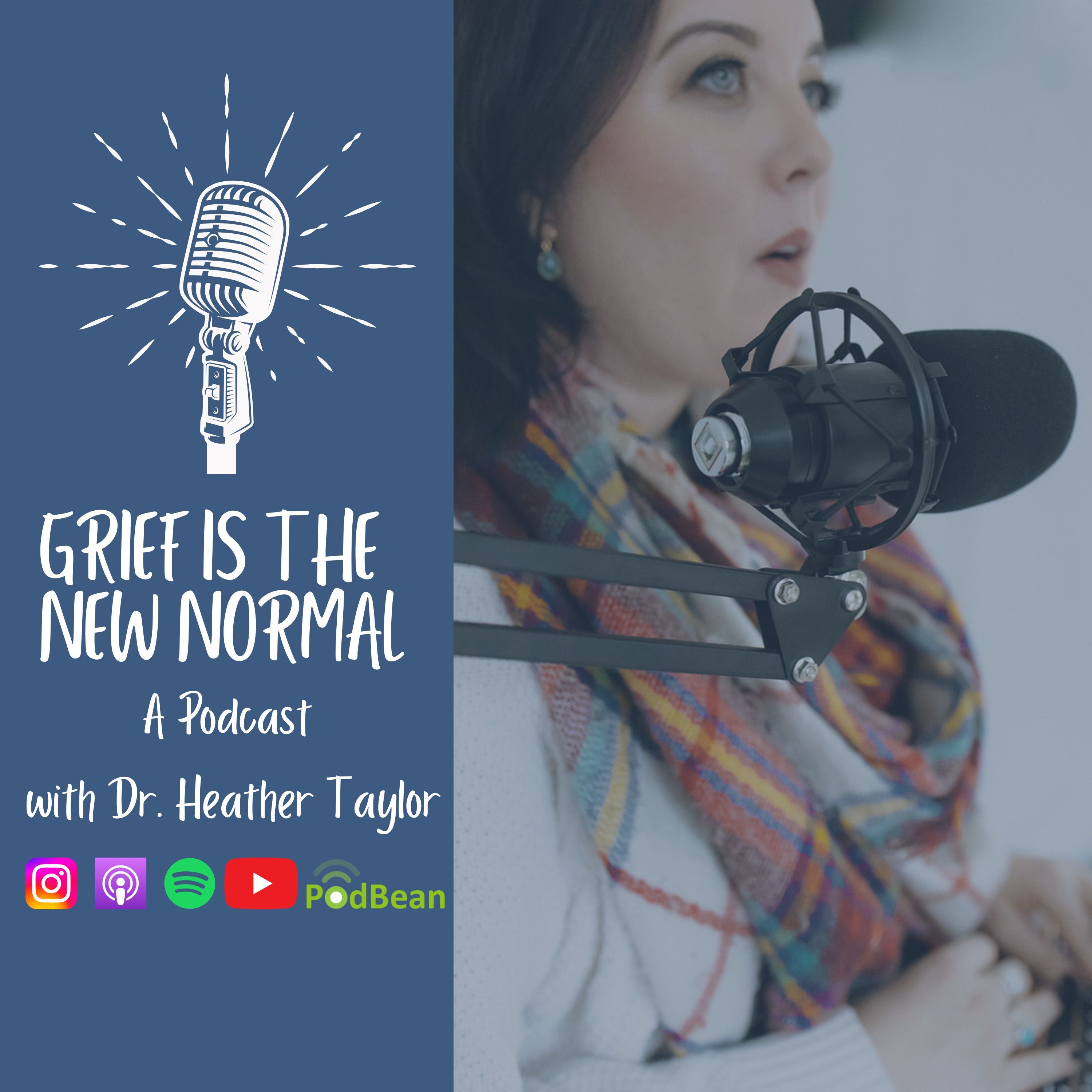
Grief is the New Normal is a podcast for anyone who has ever lost something that mattered. Hosted by Dr. Heather Taylor, licensed psychologist and grief specialist, the show brings honest, science-grounded grief education to everyday grievers and mental health professionals alike.
Most of us were never taught how to grieve. We were handed platitudes, timelines, and the message to move on. This podcast exists to replace all of that with something more useful: real information, clinical research, and conversations that actually reflect what grief looks like in real life.
Every episode covers the full spectrum of loss, not just death. Divorce, infertility, job loss, estrangement, identity loss, ambiguous loss, and disenfranchised grief all have a place here. Whether you are in the thick of it or trying to make sense of something you lost years ago, you will find episodes that meet you where you are.
Dr. Taylor brings both clinical expertise and personal experience to every conversation. Solo teaching episodes explore grief reactions, grief theory, and the STAY Framework, a clinically informed approach to grief integration developed by Dr. Taylor herself. Guest interviews feature clinicians, researchers, and advocates working at the intersection of grief, mental health, and human experience.
This is not a podcast about getting over it. It is a podcast about learning to carry it differently.
Available on Spotify, Apple Podcasts, and wherever you listen to podcasts.
Episodes

60 minutes ago
60 minutes ago
53 min
When Your Faith Community Doesn’t Know What to Do With Your Grief, with Rev. Dr. Tammy Isaac
When Rev. Dr. Tammy Isaac lost her father and then her mother, she was serving as an associate pastor. She needed more support than her church could give, and that made her ask a hard question: if this is how I’m being treated, how have we been treating everyone else who is grieving?
Dr. Tammy is a hospital chaplain at UTMB Health Angleton Danbury Campus, founder of Breathe Counseling Center, host of the Permission to Breathe podcast, and the author of several books on grief, faith, and healing. In this conversation with Dr. Heather Taylor, PsyD, licensed psychologist and grief specialist, she talks about faith, community, chronic pain, breathwork, and why grief is a teacher and not the villain.
What you’ll learn
- Why faith communities often skip past grief to get to hope, and how that hurts grievers spiritually, emotionally, and mentally
- What “let the church grieve” means: validating pain, honoring love that was lost, and making room for every emotion
- How to hold grief and a strong spiritual identity together, including anger and disappointment inside a relationship with God
- Why you can be grieved and relieved at the same time
- How chronic pain and invisible illness bring grief for lost roles, plans, relationships, and identity
- A simple breathwork approach for acute grief and anxiety that aims for neutral, not positive
- What compassion for yourself looks like for Black women who are expected to push through pain in silence
- Why reflecting on the past year matters before you move forward
Key concepts
- Spiritual bypassing in grief: rushing to “it’ll get better” or “let go and let God” before people have had space to feel
- Silent Saturday: the in-between space of mourning that faith traditions tend to skip on the way to celebration
- Both/and grief: joy and sorrow, grief and relief, anger and love can all exist at once
- Non-death loss: grief for health, ability, routine, relationships, and the future you expected
- Invisible grief: grief you can’t see but can hear, if you’re willing to listen
- Getting to neutral: using breath to calm the nervous system enough to take in hard news, without pretending things are fine
- Grief integration: carrying who someone was to us forward into our story, rather than “accepting” and moving on
Timestamps
Resources mentioned
- The Grief Inside the Ache: Pain Led, Grief Followed by Dr. Tammy Isaac
- Collateral Beauty: A Black Woman’s Metamorphosis of Grief, Self-Love, and Healing
- Let the Church Grieve
- Begin Again
- Permission to Breathe podcast
- Breathe Counseling Center [link]
- YearCompass, a free annual reflection workbook [link]
References
- Romans 12:15, “Rejoice with those who rejoice; weep with those who weep”
- Romans 5:3–5, suffering, perseverance, character, and hope
- Hebrews 9:27
- Doka, K. J. (Ed.). (1989). Disenfranchised Grief: Recognizing Hidden Sorrow. Lexington Books.
- Klass, D., Silverman, P. R., & Nickman, S. L. (Eds.). (1996). Continuing Bonds: New Understandings of Grief. Taylor & Francis.
Find more at thedrheathertaylor.com. Your grief is real, it matters, and you don’t have to carry it alone.
This podcast is for education and support and is not a substitute for therapy or medical care.
------------------
Dr. Tammy Isaac is a Spiritual Practitioner, Author, Grief Advocate, and Educator who helps individuals and communities navigate loss with clarity and spiritual grounding. She is the founder of Breathe Counseling Center, where she provides faith-informed guidance and practical tools for emotional healing. Dr. Isaac also hosts the Permission to Breathe Podcast, a space created to help listeners slow down, breathe, and explore the many layers of grief. She serves as a Chaplain at UTMB Health Angleton Danbury Campus, offering spiritual care to patients, families, and staff. Her work spans conference presentations, grief education, and community outreach. Dr. Isaac is the author of several books, including Collateral Beauty: A Black Woman’s Metamorphosis of Grief, Self-Love, and Healing, Let the Church Grieve, Begin Again, and her newest work, The Grief Inside the Ache. Dr. Isaac has been featured in several news articles highlighting her leadership in grief support and emotional wellness. She was a featured author at the Grieftastic Brunch and Book Fair hosted by Meghan Riordan-Jarvis, where she connected with leaders and advocates in the field of grief, death, and dying. She is also a 2026 nominee for the ADEC Community Educator Award, recognizing her contributions to grief education and community engagement. Her latest projects include resource saddle-stitch booklets focused on grief and emotional healing for nurses, first responders, breast cancer survivors, perinatal bereavement, family bereavement, and grief in the workplace.
Connect with Dr. Isaac:
Instagram: @drtammyisaac
Facebook: @drtammyisaac
LinkedIn: Dr. Tammy Isaac
Podcast: Permission to Breathe Podcast on Apple and Spotify
Website: www.breathegriefcounseling.com
---------------------
Grief is not a problem to solve. It is a human experience to move through, and most of us were never taught how.
Grief is the New Normal is hosted by Dr. Heather Taylor, licensed psychologist and grief specialist with over a decade of experience in grief, trauma, and reproductive psychology. This show exists to change the conversation around loss by expanding what grief looks like, who it belongs to, and what it actually means to integrate it into your life.
Whether you're grieving a death, a diagnosis, a relationship, an identity shift, or the world as you knew it, your grief is real, it deserves space, and you are not behind. And if you're a clinician, coach, or helper carrying your own grief while holding space for others, this show was built for you too.
Dr. Taylor brings research-informed frameworks, honest clinical perspective, and the STAY framework, a grief-informed approach to living with loss that goes far beyond the five stages. Expect nuance, depth, and conversations that take grief seriously.
No toxic positivity. No fixing. Just honest conversation, real validation, and a community built around grief literacy, disenfranchised grief, anticipatory grief, collective grief, and the full spectrum of human loss.
grief support podcast · disenfranchised grief · anticipatory grief · grief after loss · grief for clinicians · grief-informed care · grief literacy · coping with grief · grief and identity · mental health and grief · reproductive grief · pet loss grief · collective trauma and grief · grief integration · STAY framework
New episodes dropping regularly
Connect with Dr. Heather Taylor:
Website: griefisthenewnormal.com
Instagram: @dr.heathertaylor
Substack: How We STAY with Grief https://drheathertaylor.substack.com/
Newsletter: Bridging the Grief Gap on LinkedIn
https://www.linkedin.com/in/heather-taylor-psyd-licensed-psychologist/
Journal: Authentically Unapologetic, available on Amazon https://a.co/d/0dM0DloC
Contact: heather@thedrheathertaylor.com
Music by The Dadicorns. Copyright 2026.

Oct 28, 2026
Oct 28, 2026
53 min
Chasing Joy While Holding Grief: Dr. Tasha Faruqui on Anticipatory Grief and Parenting a Medically Complex Child
Licensed psychologist and grief specialist Dr. Heather Taylor interviews pediatrician and author Dr. Tasha Faruqui about her daughter Soraya's rare, progressive, life-limiting condition and how it led to her book, "Keep Your Head Up: Chasing Joy While Holding Grief." Faruqui recounts early advocacy for feeding and developmental concerns, a years-long diagnostic odyssey, later neuromuscular decline, ventilator support, palliative care, and hospice, along with the isolation of living “parallel lives” until community and perspective shifted after a Make-A-Wish trip. They discuss blending identities beyond “hats,” rejecting linear “acceptance,” defining anticipatory grief and ambiguous grief, and actively pursuing joy through family planning. Faruqui shares advice for caregivers (reducing guilt, meeting basic needs) and for practitioners (pausing to truly ask “How are you?”, offering practical help, and validating uncertainty), and notes book proceeds are donated to nonprofits including Cincinnati Children’s and Make-A-Wish.
00:00 Grief Is Not A Problem
00:24 Meet Dr Tasha
01:23 Early Signs And Advocacy
03:09 Diagnosis Odyssey And Dreams
06:10 Progression And Palliative Care
07:37 Make A Wish Mindshift
12:45 No Hats Just Whole
20:34 Suck The Joy Out
24:25 Defining Anticipatory Grief
29:51 Keep Your Head Up Book
32:08 Chasing Joy Holding Grief
36:44 Music Playlist Chapters
42:52 Caregiver Guilt And Basics
46:49 Practitioner Support Tips
50:35 Giving Back And Closing
------------------------------------
Dr. Tasha Faruqui is a pediatrician, speaker, advocate, and author. Inspired by her daughter Soraya, who is currently in hospice due to a rare genetic disorder, Tasha's work focuses on advocating for parents of medically complex children and raising awareness about anticipatory grief. Connect and learn more at www.tashafaruqui.com.
Instagram: @TheFaruqui5
Website: Tashafaruqui.com
Book: Keep Your Head Up: A Mother's Story of Chasing Joy in the Face of Grief
---------------------------
Grief is not a problem to solve. It is a human experience to move through, and most of us were never taught how.
Grief is the New Normal is hosted by Dr. Heather Taylor, licensed psychologist and grief specialist with over a decade of experience in grief, trauma, and reproductive psychology. This show exists to change the conversation around loss by expanding what grief looks like, who it belongs to, and what it actually means to integrate it into your life.
Whether you're grieving a death, a diagnosis, a relationship, an identity shift, or the world as you knew it, your grief is real, it deserves space, and you are not behind. And if you're a clinician, coach, or helper carrying your own grief while holding space for others, this show was built for you too.
Dr. Taylor brings research-informed frameworks, honest clinical perspective, and the STAY framework, a grief-informed approach to living with loss that goes far beyond the five stages. Expect nuance, depth, and conversations that take grief seriously.
No toxic positivity. No fixing. Just honest conversation, real validation, and a community built around grief literacy, disenfranchised grief, anticipatory grief, collective grief, and the full spectrum of human loss.
grief support podcast · disenfranchised grief · anticipatory grief · grief after loss · grief for clinicians · grief-informed care · grief literacy · coping with grief · grief and identity · mental health and grief · reproductive grief · pet loss grief · collective trauma and grief · grief integration · STAY framework
New episodes dropping regularly
Connect with Dr. Heather Taylor:
Website: griefisthenewnormal.com
Instagram: @dr.heathertaylor
Substack: How We STAY with Grief https://drheathertaylor.substack.com/
Newsletter: Bridging the Grief Gap on LinkedIn
https://www.linkedin.com/in/heather-taylor-psyd-licensed-psychologist/
Journal: Authentically Unapologetic, available on Amazon https://a.co/d/0dM0DloC
Contact: heather@thedrheathertaylor.com
Music by The Dadicorns. Copyright 2026.

Oct 22, 2026
Oct 22, 2026
46 min
Before I Lose My Own Mind: Dementia Caregiving, Sequential Grief, and Planning Ahead (with Beverly E. Thorn, PhD)
Dr. Heather Taylor hosts Beverly E. Thorn, PhD, a clinical health psychologist, chronic illness author, and certified end-of-life doula, to discuss dementia caregiving and grief. Thorn shares how her long career helping people cope with chronic pain intersected with her husband Walt’s Alzheimer’s diagnosis in 2013 after early concerns in 2004, leading her into caregiving, bereavement, and eventually writing a personal trade book, Before I Lose My Own Mind: Navigating Life as a Dementia Caregiver. They explore “sequential” (anticipatory) grief, isolation and abandonment caregivers often feel, exhaustion and guilt, survivor’s guilt, and the value of honest end-of-life planning and clear directives to reduce later decision burdens. Thorn describes supports that helped, the importance of hiring help sooner, teaching others how to help with specific requests, and offers free caregiving resources at drbeverlythorn.com plus Substack and Facebook.
00:00 Grief Is Not A Problem
00:24 Meet Beverly Thorn
01:24 Caregiving Becomes Personal
03:23 Writing The Caregiving Book
05:51 Sequential Grief Explained
09:33 Planning End Of Life Wishes
12:36 Remembering Walt
16:14 Caregiver Support Systems
23:14 Asking For Practical Help
25:03 Asking Without Guilt
26:02 Survivor Guilt Begins
29:14 Honoring Walt Forward
31:05 Signs And Glimmers
33:15 Grief After Death
35:45 Memorials On Your Terms
37:52 Dementia Planning Basics
41:55 Caregivers Not Alone
43:23 Where To Find Beverly
45:30 Final Takeaways
---------------------------------
Beverly E. Thorn, Ph.D., is the author of hundreds of articles, two books, and four workbooks on coping with chronic illness. She spent decades as a faculty member at The Ohio State University and The University of Alabama, where she went on to serve as director of the clinical psychology PhD program and department chair in psychology. Currently professor emerita, licensed psychologist, and board certified in clinical health psychology, she is also a certified end-of-life doula and continues to publish, speak, and conduct workshops nationally and internationally on managing chronic illness.
https://beverlythorn.substack.com/publish/home?utm_source=menu
https://www.linkedin.com/in/beverly-thorn-658554318/
https://www.facebook.com/beverly.thorn.3
--------------------------------
Grief is not a problem to solve. It is a human experience to move through, and most of us were never taught how.
Grief is the New Normal is hosted by Dr. Heather Taylor, licensed psychologist and grief specialist with over a decade of experience in grief, trauma, and reproductive psychology. This show exists to change the conversation around loss by expanding what grief looks like, who it belongs to, and what it actually means to integrate it into your life.
Whether you're grieving a death, a diagnosis, a relationship, an identity shift, or the world as you knew it, your grief is real, it deserves space, and you are not behind. And if you're a clinician, coach, or helper carrying your own grief while holding space for others, this show was built for you too.
Dr. Taylor brings research-informed frameworks, honest clinical perspective, and the STAY framework, a grief-informed approach to living with loss that goes far beyond the five stages. Expect nuance, depth, and conversations that take grief seriously.
No toxic positivity. No fixing. Just honest conversation, real validation, and a community built around grief literacy, disenfranchised grief, anticipatory grief, collective grief, and the full spectrum of human loss.
grief support podcast · disenfranchised grief · anticipatory grief · grief after loss · grief for clinicians · grief-informed care · grief literacy · coping with grief · grief and identity · mental health and grief · reproductive grief · pet loss grief · collective trauma and grief · grief integration · STAY framework
New episodes dropping regularly
Connect with Dr. Heather Taylor:
Website: griefisthenewnormal.com
Instagram: @dr.heathertaylor
Substack: How We STAY with Grief https://drheathertaylor.substack.com/
Newsletter: Bridging the Grief Gap on LinkedIn
https://www.linkedin.com/in/heather-taylor-psyd-licensed-psychologist/
Journal: Authentically Unapologetic, available on Amazon https://a.co/d/0dM0DloC
Contact: heather@thedrheathertaylor.com
Music by The Dadicorns. Copyright 2026.

Jun 25, 2026
Jun 25, 2026
18 min
Behavioral Grief Reactions: Why Grief Changes What You Do, Not Just How You Feel
You have been saying yes to everything because stopping feels terrifying. You have not responded to a text in two weeks. You reorganized the closet three times this month. You are on your second bottle of wine more nights than you want to admit. You got the tattoo.
That is not you being impulsive, flaky, or self-destructive. That is grief taking the wheel.
In episode four of the six-part Common Grief Reactions series, Dr. Heather Taylor gets into the behavioral side of grief, the part that shows up in your daily habits, your relationships, your phone, your pantry, and your couch. The part that tends to carry the most shame and gets explained away as stress or a personality change or just a weird phase, when really it is grief trying to metabolize itself through action, avoidance, or control.
If you have ever looked at what you have been doing since your loss and thought "what is wrong with me," this episode is for you. Nothing is wrong with you. You are grieving, and those two things explain a lot.
In this episode you will learn:
- Why grief changes not just how you feel but what you actually do
- The two ends of the behavioral grief spectrum: over-functioning and under-functioning, and why both are protective
- Why most grieving people cycle between both and what that cycling actually looks like
- The most common numbing behaviors in grief, including alcohol use, doom scrolling, impulse decisions, and perpetual busyness, and why none of them are moral failures
- How to tell the difference between coping and avoidance, and why that distinction matters
- Why staying perpetually busy is one of the most sophisticated and culturally approved numbing behaviors we have
- How to get curious about your grief behaviors without shaming yourself for any of them
- The one question to ask yourself when you want to understand what a behavior is really about
Behavioral grief patterns discussed in this episode:
Over-functioning, under-functioning, grief avoidance, numbing behaviors, alcohol use after loss, doom scrolling, impulse decisions, isolation, social withdrawal, grief and anger, grief and irritability, busyness as avoidance, grief coping strategies, grief behaviors, grief and control
Story Time with Heather:
Dr. Taylor shares what happened the week after her brother died, when she poured herself and her whole grieving family into making holiday gift card aprons for Barnes and Noble, and what it taught her about over-functioning as a grief response. She also talks about her depression slippers, the one-year anniversary, and what it looked like when the over-functioning finally gave way.
STAY Framework connection:
This episode works with two letters. T, Track the Loss, which means tracing a behavior back to its source and asking what loss is actually underneath it. And Y, Yield to the Moment, which means responding to what is genuinely needed right now, not what your pre-grief self would have done or what the productivity app on your phone is telling you to do.
Practical tools from this episode:
- Replace judgment with curiosity: shift from "what is wrong with me" to "what is my grief asking for right now"
- Pick one small anchoring habit to create a thread of predictability in an unpredictable season
- Name the behavior as grief out loud: "I am not flaky, I am grieving"
- Ask the core question: is this behavior helping me move through grief or helping me move away from it?
Series navigation:
- Episode 1: Physical Grief Reactions: When Loss Lives in the Body
- Episode 2: Emotional Grief Reactions: The Feelings Nobody Puts in a Sympathy Card
- Episode 3: Cognitive Grief Reactions: Grief Brain Is Real
- Episode 4: Behavioral Grief Reactions: Why Grief Changes What You Do (you are here)
- Episode 5: Spiritual and Existential Grief Reactions (coming next)
- Episode 6: Social Grief Reactions
-------------------------------------
Grief is not a problem to solve. It is a human experience to move through, and most of us were never taught how.
Grief is the New Normal is hosted by Dr. Heather Taylor, licensed psychologist and grief specialist with over a decade of experience in grief, trauma, and reproductive psychology. This show exists to change the conversation around loss by expanding what grief looks like, who it belongs to, and what it actually means to integrate it into your life.
Whether you're grieving a death, a diagnosis, a relationship, an identity shift, or the world as you knew it, your grief is real, it deserves space, and you are not behind. And if you're a clinician, coach, or helper carrying your own grief while holding space for others, this show was built for you too.
Dr. Taylor brings research-informed frameworks, honest clinical perspective, and the STAY framework, a grief-informed approach to living with loss that goes far beyond the five stages. Expect nuance, depth, and conversations that take grief seriously.
No toxic positivity. No fixing. Just honest conversation, real validation, and a community built around grief literacy, disenfranchised grief, anticipatory grief, collective grief, and the full spectrum of human loss.
grief support podcast · disenfranchised grief · anticipatory grief · grief after loss · grief for clinicians · grief-informed care · grief literacy · coping with grief · grief and identity · mental health and grief · reproductive grief · pet loss grief · collective trauma and grief · grief integration · STAY framework
New episodes dropping regularly
Connect with Dr. Heather Taylor:
Website: griefisthenewnormal.com
Instagram: @dr.heathertaylor
Substack: How We STAY with Grief https://drheathertaylor.substack.com/
Newsletter: Bridging the Grief Gap on LinkedIn
https://www.linkedin.com/in/heather-taylor-psyd-licensed-psychologist/
Journal: Authentically Unapologetic, available on Amazon https://a.co/d/0dM0DloC
Contact: heather@thedrheathertaylor.com
Music by The Dadicorns. Copyright 2026.

Jun 18, 2026
Jun 18, 2026
52 min
Grief is not just about death. It lives inside fertility journeys, inside the waiting and the not knowing, inside the losses that do not come with funerals or casseroles or anyone checking in six months later. And sometimes it lives right alongside joy, which is one of the most disorienting and least talked about parts of the whole experience.
In this episode, Dr. Heather Taylor sits down with Jessica Vickers, licensed marriage and family therapist, certified perinatal mental health counselor, EMDR clinician, and founder of the Happiest Healers Club. Jessica shares her own grief story, her clinical approach to perinatal and infertility loss, how EMDR supports grief integration, and why therapists need community and play just as much as their clients do.
This one is warm, real, a little bit Disney-filled, and deeply human.
In this episode you will learn:
- What ambiguous grief looks like in the context of infertility and the perinatal journey, and why it is one of the hardest grief types to hold
- How EMDR supports grief processing by moving the nervous system from maladaptive beliefs toward adaptive meaning-making
- Why the second and third pregnancy losses hit differently, and how to support clients who are still in the middle of not knowing
- What continuing bonds look like in practice, including how Jessica stays connected to her dad and her best friend through Disneyland, Groot ears, and tree planting
- Why nothing good happens when we are dysregulated, and what to do before you act on grief or rage or fear
- How to talk about your grief with new people in your life who never knew your person
- What survivor guilt sounds like in grief, and how to gently challenge it
- How EMDR physically calms the body before it works on the story
- Why therapist burnout is a grief response too, and what the Happiest Healers Club is doing about it
Topics and concepts discussed in this episode:
Ambiguous grief, infertility grief, perinatal loss, miscarriage, pregnancy loss, EMDR for grief, bilateral stimulation, grief integration, continuing bonds, survivor guilt, grief and joy, caregiver fatigue, anticipatory grief, disenfranchised grief, grief and the nervous system, clinician burnout, therapist self-care, meaning-making after loss, grief and community
-----------------------------
Jessica Vickers is a licensed marriage & family therapist, and also a certified perinatal mental health counselor. Jessica has been a therapist for over 13 years, and specializes in working with women of color and women going through the perinatal journey. Jessica utilizes EMDR in her virtual private practice. She is a Black woman, a wife, a mom, and the founder of The Happiest Healers Club. @jessicavickersmft on Instagram
--------------------------------
Grief is not a problem to solve. It is a human experience to move through, and most of us were never taught how.
Grief is the New Normal is hosted by Dr. Heather Taylor, licensed psychologist and grief specialist with over a decade of experience in grief, trauma, and reproductive psychology. This show exists to change the conversation around loss by expanding what grief looks like, who it belongs to, and what it actually means to integrate it into your life.
Whether you're grieving a death, a diagnosis, a relationship, an identity shift, or the world as you knew it, your grief is real, it deserves space, and you are not behind. And if you're a clinician, coach, or helper carrying your own grief while holding space for others, this show was built for you too.
Dr. Taylor brings research-informed frameworks, honest clinical perspective, and the STAY framework, a grief-informed approach to living with loss that goes far beyond the five stages. Expect nuance, depth, and conversations that take grief seriously.
No toxic positivity. No fixing. Just honest conversation, real validation, and a community built around grief literacy, disenfranchised grief, anticipatory grief, collective grief, and the full spectrum of human loss.
grief support podcast · disenfranchised grief · anticipatory grief · grief after loss · grief for clinicians · grief-informed care · grief literacy · coping with grief · grief and identity · mental health and grief · reproductive grief · pet loss grief · collective trauma and grief · grief integration · STAY framework
New episodes dropping regularly
Connect with Dr. Heather Taylor:
Website: griefisthenewnormal.com
Instagram: @grief_is_the_new_normal
Substack: How We STAY with Grief https://drheathertaylor.substack.com/
Newsletter: Bridging the Grief Gap on LinkedIn
https://www.linkedin.com/in/heather-taylor-psyd-licensed-psychologist/
Journal: Authentically Unapologetic, available on Amazon https://a.co/d/0dM0DloC
Contact: hello@griefisthenewnormal.com
This episode is sponsored by Oasys EHR. Try Oasys free for your first month. Use code HEATHER-2865 at oasysehr.com.
Music by The Dadicorns. Copyright 2026.

Jun 15, 2026
Jun 15, 2026
19 min
Grief Brain Is Real: The Neuroscience of Cognitive Grief Reactions
You have reread that email four times and still cannot tell anyone what it said. You walked into a room and have no idea why you are there. You used to read a book a week and now you cannot get through a chapter. You feel like you are failing at being a functional adult.
You are not failing. You are grieving. And your brain is in the middle of one of the most demanding neurological processes it will ever be asked to do.
In episode three of the six-part Common Grief Reactions series, Dr. Heather Taylor goes upstairs into the mind to explain what is actually happening in the grieving brain, why it happens, and what to do about it with compassion instead of shame.
In this episode you will learn:
- What grief brain actually is and what the neuroscience says about why it happens
- Why your prefrontal cortex basically goes offline during grief and what that costs you functionally
- How grief disrupts memory, concentration, decision-making, and executive function
- What the "year two ambush" is and why the second year of grief often hits harder than the first
- Why grief warps your sense of time and what that means for your autobiographical memory
- How to tell the difference between grief-related cognitive changes and something that needs clinical attention
- What "bare minimum mode" means and why it is not giving up, it is working with your brain
- Practical, compassion-first strategies for functioning during grief without shaming yourself into the ground
Cognitive grief symptoms discussed in this episode:
Memory loss and forgetfulness, concentration difficulties, decision fatigue, time distortion, intrusive thoughts and looping memories, dissociation, executive dysfunction, task initiation problems, neurofatigue, grief fog, brain fog after loss
Story Time with Heather:
Dr. Taylor shares what happened to her own reading life after her brother died, how the one escape that had carried her since childhood suddenly stopped working, and how she and her clients have found ways to adapt rather than just wait for the fog to lift. She also shares a sneak peek at her new spinoff podcast, Grief Between the Pages, exploring grief through the lens of romantasy and fiction.
STAY Framework connection:
This episode works with the S in STAY: Slow Down. Dr. Taylor breaks down why trying to out-discipline or out-willpower grief brain makes it worse, and what it actually looks like to reduce cognitive load as an act of care rather than surrender.
Practical tools from this episode:
- Bare minimum mode: giving yourself permission to function at a reduced capacity because that is what is actually happening
- External scaffolding: sticky notes, phone alarms, calendar reminders for things your working memory cannot hold right now
- Breaking tasks into micro-steps to lower the initiation cost
- Talking to yourself like someone you love when you freeze, forget, or fall short
- Using the fog as information: cognitive heaviness often signals an emotional wave is coming
Research and references:
- Mary-Frances O'Connor, neuroscientist and author, on the grieving brain and predictive modeling
- The prefrontal cortex and limbic system in grief
- Executive function and emotional load
- Autobiographical memory and temporal disorientation in grief
Series navigation:
- Episode 1: Physical Grief Reactions: When Loss Lives in the Body
- Episode 2: Emotional Grief Reactions: The Feelings Nobody Puts in a Sympathy Card
- Episode 3: Cognitive Grief Reactions: Grief Brain Is Real (you are here)
- Episode 4: Behavioral Grief Reactions: The Weird Things We Do When We Are Hurting (coming next)
- Episode 5: Spiritual and Existential Grief Reactions
- Episode 6: Social Grief Reactions
------------------------
Grief is not a problem to solve. It is a human experience to move through, and most of us were never taught how.
Grief is the New Normal is hosted by Dr. Heather Taylor, licensed psychologist and grief specialist with over a decade of experience in grief, trauma, and reproductive psychology. This show exists to change the conversation around loss by expanding what grief looks like, who it belongs to, and what it actually means to integrate it into your life.
Whether you're grieving a death, a diagnosis, a relationship, an identity shift, or the world as you knew it, your grief is real, it deserves space, and you are not behind. And if you're a clinician, coach, or helper carrying your own grief while holding space for others, this show was built for you too.
Dr. Taylor brings research-informed frameworks, honest clinical perspective, and the STAY framework, a grief-informed approach to living with loss that goes far beyond the five stages. Expect nuance, depth, and conversations that take grief seriously.
No toxic positivity. No fixing. Just honest conversation, real validation, and a community built around grief literacy, disenfranchised grief, anticipatory grief, collective grief, and the full spectrum of human loss.
grief support podcast · disenfranchised grief · anticipatory grief · grief after loss · grief for clinicians · grief-informed care · grief literacy · coping with grief · grief and identity · mental health and grief · reproductive grief · pet loss grief · collective trauma and grief · grief integration · STAY framework
New episodes dropping regularly
Connect with Dr. Heather Taylor:
Website: griefisthenewnormal.com
Instagram: @grief_is_the_new_normal
Substack: How We STAY with Grief https://drheathertaylor.substack.com/
Newsletter: Bridging the Grief Gap on LinkedIn
https://www.linkedin.com/in/heather-taylor-psyd-licensed-psychologist/
Journal: Authentically Unapologetic, available on Amazon https://a.co/d/0dM0DloC
Contact: hello@griefisthenewnormal.com
This episode is sponsored by Oasys EHR. Try Oasys free for your first month. Use code HEATHER-2865 at oasysehr.com.
Music by The Dadicorns. Copyright 2026.

Jun 11, 2026
Jun 11, 2026
1 hr 5 min
What Grief Reveals: Liberation Psychology, Emotional Suppression, and the Power of Story with Dr. Rohit Agrawal
Grief does not exist in a vacuum. It lives inside systems, inside bodies, inside communities that have been taught to look away from pain. In this episode, Dr. Heather Taylor sits down with Dr. Rohit Agrawal, licensed clinical psychologist and liberation psychology practitioner, to explore what grief reveals when we actually stop running from it.
This conversation goes deep. From why men are emotionally robbed by cultural norms around masculinity, to how Dungeons and Dragons can be a vehicle for grief processing, to what radical extremism and substance use have in common at their root, Dr. Rohit brings a framework that expands what grief-informed care can actually look like.
If you have ever wondered why grief can feel both devastating and clarifying, or why so many people are in pain even as access to mental health care increases, this episode will shift how you think about both.
In this episode you will learn:
- What liberation psychology is and why it matters for grief-informed care
- How emotional suppression in men links to loneliness, substance use, family conflict, and extremism
- Why the grief of cultural disconnection and internalized oppression is real and requires naming
- How storytelling, gaming, and media help people access emotions that are otherwise locked away
- What "follow the fear" means as a clinical tool and how it leads back to grief every time
- Why grief reveals what matters to us, and how that can be liberating rather than only painful
- How to help someone reconnect with emotion when they have spent years pushing feelings down
- What it means to be therapeutic with one another without being each other's therapist
Concepts and frameworks discussed in this episode:
Liberation psychology, internalized oppression, systemic grief, disenfranchised grief, existential grief, memento mori, values clarification, somatic grounding, bibliotherapy, tabletop role-playing games as therapeutic modality, D&D therapy, masculinity and emotional restriction, shame and suicide risk in men, continuing bonds, the dual process of meaning-making, grief as catalyst, the Bechdel test and non-toxic masculinity in storytelling
About Dr. Rohit Agrawal:
Dr. Rohit Agrawal is a Licensed Clinical Psychologist and practitioner at Center Focused Therapy in Chicago, IL. In his work with clients, Rohit challenges the impact of systemic oppressions on individuals and communities. He is passionate about demystifying mental healthcare and combating internalized presumptions of power, privilege, and normalcy that have a profound impact on community health. Rohit co-facilitates a weekly interpersonal Men of Color process group, destigmatizing the conditioning men have received around emotional vulnerability and relationship-building.
Outside of his clinical work, Rohit engages in professional and community education and consultation to depathologize suffering and promote forms of sustainable community care. His outlook is informed by bell hooks, Irvin Yalom, Lillian Comas-Diaz, Carl Rogers, Thích Nhất Hạnh, and R.D Laing.
Outside of his involvement in the psychology field, Rohit is an avid Dungeons & Dragons player and Game Master, and deeply believes in the power of tabletop gaming as a vehicle for storytelling, creative expression, and community connection. He is currently building up his social media channel and presence to combine gaming, storytelling, and liberation psychology. Check out Free Action when it goes live in Winter 2025.
-------------------------------
Grief is not a problem to solve. It is a human experience to move through, and most of us were never taught how.
Grief is the New Normal is hosted by Dr. Heather Taylor, licensed psychologist and grief specialist with over a decade of experience in grief, trauma, and reproductive psychology. This show exists to change the conversation around loss by expanding what grief looks like, who it belongs to, and what it actually means to integrate it into your life.
Whether you're grieving a death, a diagnosis, a relationship, an identity shift, or the world as you knew it, your grief is real, it deserves space, and you are not behind. And if you're a clinician, coach, or helper carrying your own grief while holding space for others, this show was built for you too.
Dr. Taylor brings research-informed frameworks, honest clinical perspective, and the STAY framework, a grief-informed approach to living with loss that goes far beyond the five stages. Expect nuance, depth, and conversations that take grief seriously.
No toxic positivity. No fixing. Just honest conversation, real validation, and a community built around grief literacy, disenfranchised grief, anticipatory grief, collective grief, and the full spectrum of human loss.
grief support podcast · disenfranchised grief · anticipatory grief · grief after loss · grief for clinicians · grief-informed care · grief literacy · coping with grief · grief and identity · mental health and grief · reproductive grief · pet loss grief · collective trauma and grief · grief integration · STAY framework
New episodes dropping regularly
Connect with Dr. Heather Taylor:
Website: griefisthenewnormal.com
Instagram: @dr.heathertaylor
Substack: How We STAY with Grief https://drheathertaylor.substack.com/
Newsletter: Bridging the Grief Gap on LinkedIn
https://www.linkedin.com/in/heather-taylor-psyd-licensed-psychologist/
Journal: Authentically Unapologetic, available on Amazon https://a.co/d/0dM0DloC
Contact: hello@griefisthenewnormal.com
This episode is sponsored by Oasys EHR. Try Oasys free for your first month. Use code HEATHER-2865 at oasysehr.com.
Music by The Dadicorns. Copyright 2026.

Jun 8, 2026
Jun 8, 2026
24 min
Grief is not just sadness. It is rage, relief, guilt, numbness, joy, and everything in between, often all in the same afternoon. In this episode, Dr. Heather Taylor continues her six-part series on common grief reactions by unpacking the emotional chaos of grief and why it is not only normal, it is expected.
If you have ever cried in the car and then laughed twenty minutes later and felt terrible about it, or waited for the "real" feelings to arrive and felt scared when nothing came, this episode gives you language for what is actually happening and permission to stop judging yourself for it.
In this episode you will learn:
- Why grief is not an emotion but a container for all of your emotions
- Why joy, laughter, and relief during grief are not betrayal, they are adaptive
- How Stroebe and Schut's dual process model explains the emotional whiplash of grief
- Why some feelings arrive months or years late, and what that actually means
- The taboo grief feelings nobody talks about: relief, anger, guilt, numbness, and joy
- How to use the STAY framework to track specific losses and allow emotional complexity
- Why moving emotions through the body matters as much as processing them mentally
- How to find the right witnesses for your grief and why that changes everything
Feelings and concepts discussed: Sadness, rage, guilt, relief, numbness, joy, emotional whiplash, delayed grief, disenfranchised grief, grief as a container, affect labeling, completion cycles, grief witnesses.
Story Time with Heather: Dr. Taylor shares a personal story about training for a half marathon after her heart failure diagnosis and the unexpected emotional release that came with crossing the finish line, a powerful example of delayed grief finding its moment.
Resources and concepts mentioned:
- George Bonanno: variability in bereavement and emotional trajectories
- Stroebe and Schut: dual process model of bereavement
- Kenneth Doka: disenfranchised grief
- Daniel Siegel: affect labeling and the prefrontal cortex
- The Dougy Center: grief is contextual
- The STAY Framework: Track the Loss, Allow Complexity
This is Part 2 of 6 in the Grief Reactions Series: Part 1: Physical | Part 2: Emotional | Part 3: Cognitive | Part 4: Behavioral | Part 5: Spiritual and Existential | Part 6: Social
Episode Timestamps:
00:00 Grief Is the New Normal 00:54 Emotional Chaos Explained 02:09 The Myth That Grief Should Look Like Sadness 03:58 Joy, Guilt, and the Emotional Waves 06:29 Numbness and Delayed Grief Reactions 08:43 Story Time with Heather: The Half Marathon 13:32 Taboo Feelings: Relief, Anger, Guilt, and More 17:26 What To Do With Your Grief Feelings 19:40 Practical Anchors and Finding Your Witnesses 21:25 Weekly Reflection and Invitation 23:31 Next Episode and Wrap Up
-----------------
Grief is not a problem to solve. It is a human experience to move through, and most of us were never taught how.
Grief is the New Normal is hosted by Dr. Heather Taylor, licensed psychologist and grief specialist with over a decade of experience in grief, trauma, and reproductive psychology. This show exists to change the conversation around loss by expanding what grief looks like, who it belongs to, and what it actually means to integrate it into your life.
Whether you're grieving a death, a diagnosis, a relationship, an identity shift, or the world as you knew it, your grief is real, it deserves space, and you are not behind. And if you're a clinician, coach, or helper carrying your own grief while holding space for others, this show was built for you too.
Dr. Taylor brings research-informed frameworks, honest clinical perspective, and the STAY framework, a grief-informed approach to living with loss that goes far beyond the five stages. Expect nuance, depth, and conversations that take grief seriously.
No toxic positivity. No fixing. Just honest conversation, real validation, and a community built around grief literacy, disenfranchised grief, anticipatory grief, collective grief, and the full spectrum of human loss.
grief support podcast · disenfranchised grief · anticipatory grief · grief after loss · grief for clinicians · grief-informed care · grief literacy · coping with grief · grief and identity · mental health and grief · reproductive grief · pet loss grief · collective trauma and grief · grief integration · STAY framework
New episodes dropping regularly
Connect with Dr. Heather Taylor:
Website: griefisthenewnormal.com
Instagram: @grief_is_the_new_normal
Substack: How We STAY with Grief https://drheathertaylor.substack.com/
Newsletter: Bridging the Grief Gap on LinkedIn
https://www.linkedin.com/in/heather-taylor-psyd-licensed-psychologist/
Journal: Authentically Unapologetic, available on Amazon https://a.co/d/0dM0DloC
Contact: hello@griefisthenewnormal.com
This episode is sponsored by Oasys EHR. Try Oasys free for your first month. Use code HEATHER-2865 at oasysehr.com.
Music by The Dadicorns. Copyright 2026.

Hey! I'm Dr. Heather Taylor
I'm a griever, just like you. I've experienced life altering loss, just like you. And I decided I wanted to do something to start changing the narrative of grief because as a society, we need to do it better. There needs to be better language, better tools, better willingness to talk about our loss and not leave us feeling alone in our grief. That's where this podcast comes in. I'm a licensed psychologist and have spent the last 14 years working to understand grief, it's complexities, the different ways it can impact us and the different types of loss and how we grieve. My heart is to build community so that we can feel more connected thru this universal lived experience. I'm glad you're here.